Overlay

Deep Plane Facelift

Plastic Surgery in Atlanta, GA

As we age, the loss of youthful contours can occur due to skin thinning, a loss of youthful fat, sun damage, smoking, gravity, and stress. These factors can leave us with many visible signs of aging, such as sagging facial skin, jowls, deepening folds between the nose and mouth (nasolabial folds), and fallen fat. A deep plane facelift is a sophisticated surgical procedure for you if you wish to erase these visible signs of aging, taking years off your appearance. In fact, facelift surgery is not just about looking younger; it’s also about looking more attractive and vibrant!

As we age, the face and neck tissues relax and descend, leading to sagging skin, excess soft tissue in the lower cheek (jowls), loss of a defined jawline, and loose skin of the face and neck. A deep plane facelift is a procedure that re-suspends the deeper tissues of the face to lift, reposition, and restore the face to its more youthful position, redistributing volume from the lower face to the midface. A thorough understanding of facial anatomy is essential for achieving precise and natural results tailored to each patient. WalkerMD is 20 minutes from Downtown Atlanta and 15 minutes from Buckhead.

What Is a Deep Plane Facelift?

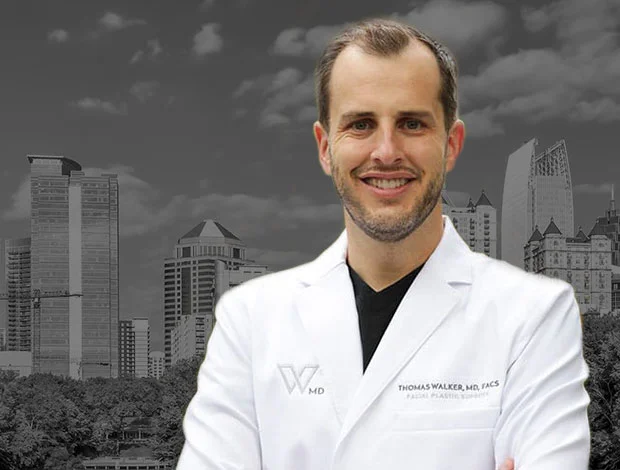
Deep-plane facelifts and structural neck lifts are among Dr. Thomas Walker’s signature treatments and most commonly requested procedures. He is proud to offer his advanced deep plane facelift procedure in Atlanta, GA, which is safe, effective, and natural.

The deep plane facelift is designed to address signs of facial aging, repositioning deep facial tissues to create a more youthful appearance. Unlike traditional facelifts that focus on tightening superficial layers of skin, this technique uses the deep-plane lift, a specialized approach that targets deeper layers of the face, such as the SMAS, providing more natural-looking results with less tension on the skin. By lifting and repositioning the underlying structures, deep plane facelifts effectively restore volume, including the midfacial area, and redefine facial contours, yielding long-lasting rejuvenation.

The deep-plane facelift is a sophisticated surgical approach that targets the foundational layer beneath the skin (SMAS), composed of muscles and soft tissues.1 This technique effectively releases tethering ligaments and moves the face and volume back into a more youthful position in the same glide plane as aging occurs. It effectively enhances the contours of the cheek and jawline, improves deep smile lines, and delivers long-lasting, natural results, avoiding the “done” or wind-tunnel look.

While more involved than superficial facelift techniques, its results are enduring, and the recovery is actually shorter than other facelift techniques. Compared to the invasive nature of traditional facelifts, the deep plane facelift’s gentler approach results in a gentler recovery with reduced swelling, bruising, and discomfort. Dr. Walker precisely placed the incisions around the ear in hidden creases, encircling the ear. Subsequently, he delicately separates the skin from the underlying SMAS, minimizing the delamination of skin from the SMAS, as the SMAS is the vehicle for the superficial skin. The SMAS layer is entered and operated underneath in the deep plane, carefully releasing tethering points to allow the facial soft tissues and fat pads to lift back into their youthful position passively. No ligaments are pulled against – unlike in other facelift techniques.

In Dr. Walker’s signature deep plane facelift, the importance of this ligamentous release is paramount, as it sets the boundaries for the level of repositioning possible and improves the long-term sustainability of the results. Once this deep restructuring is complete and the SMAS layer has been revitalized, any excess skin is carefully excised 3-dimensionally. The procedure concludes with a sophisticated closure of incisions using sutures.2

The extended deep-plane facelift that Dr. Walker offers his clients yields natural, superior outcomes, avoiding the “pulled” or “stretched” look.

For more information, please contact WalkerMD in Atlanta, GA, to schedule a free consultation with Dr. Walker.

Why is a Deep Plane Facelift by Dr. Walker Superior?

Dr. Walker is a master of deep-plane facelift surgery, delivering beautiful, natural, and long-lasting results for each client. With extensive training in facial plastic surgery, Dr. Walker’s approach is centered on a thorough understanding of anatomy and the aging process, yielding results that look unoperated and natural, without calling attention to your surgical journey. This is due to a natural manipulation of deeper layers of facial tissue and muscle, releasing tethering ligaments, operating in the same natural glide plane that our tissues descend in as we age, instead of unnaturally separating the skin from the underlying tissues, thereby separating the skin from its underlying support structures, as is done in other facelift techniques. Given these facts, Dr. Walker’s preferred modality is the extended deep plane facelift, which contours the cheeks and redefines the jawline by full ligament release and repositioning.

His eye for facial aesthetics, skilled artistry, attention to detail, meticulous strive for perfection, and dedication to giving each surgery the time it deserves are what make his results consistent, natural, predictable, and superior without compromising safety. As a skilled surgeon, Dr. Walker is well known for imperceptible incisions, meticulously tailoring each one to ensure optimal camouflage. The biggest critics are hairdressers, and they are the ones who give the biggest compliments about Dr. Walker’s work and incisions.

Dr. Walker has developed perioperative regimens, intraoperative protocols, and maneuvers to minimize bleeding and bruising, shortening your recovery time. His advanced surgical skills are key to minimizing visible scarring and optimizing your results. Dr. Walker only schedules one surgery a day, taking all the time you and your face deserve – because it’s your face.

Facelift Quick Facts

  • Surgery Time: Approximately 4–5 hours, depending on the extent of correction and whether adjunct procedures are performed.
  • Price: ~Starting at approximately $35,000 (Final pricing varies based on surgical complexity and whether additional procedures—such as a neck lift, fat grafting, or eyelid surgery—are performed. A personalized quote will be provided during your consultation.)
  • Recovery: Most patients plan for 10–14 days of social downtime, with swelling and bruising continuing to improve within a few weeks.
  • Results: Natural, refreshed facial contours that can last 10–15 years or longer, depending on genetics, lifestyle, and skincare.

Types of Facelifts

There are numerous facelift techniques, and the facelift procedure is a comprehensive surgical option for facial rejuvenation. Some techniques are the same but branded or trademarked under different names, while others differ in approach or are distinguished by nuances irrelevant to the client. Dr. Walker is a highly trained and experienced Facial Plastic Surgeon with extensive expertise in facial surgery, including advanced and minimally invasive methods. The overall goal is to create a youthful, natural look that’s subtle yet still striking, so you no longer fear looking in the mirror.

Facelift Revision

Clients who have previously undergone a facelift and are unhappy with the results or who have progressed in life enough to be ready for another facelift (typically after 10-15 years) may be candidates for a revision facelift.

Mini Facelift

A mini facelift is a procedure with a small, well-hidden incision around the ears to lift the skin and deeper tissues to a higher position, which enhances your jawline. The consultation process helps determine if you are a good candidate and allows the surgeon to personalize the mini facelift to your facial anatomy and goals. It does not address the neck, given the limited incision. It may be combined with other procedures, including chin augmentation or submental liposuction. Results are very natural and more subtle than in a full facelift, as the procedure is tailored to achieve the patient’s desired outcome.

Midface Lift

With a similar approach to the mini lift, the midface lift focuses on the hollow and lax areas near the cheekbones and the upper jaw. This lift works well for those hoping to improve the lower two-thirds of the face, which also enhances the appearance of the jowls.

Full Facelift

Considered the gold standard of all facelift techniques, a full facelift requires an incision around your ear (in front and behind) close to the temporal hairline, extending up into the temporal hairline or around the temporal hair tuft and behind the ear into the occipital hairline. The underlying facial tissues and muscles are carefully released, repositioned, and re-suspended for a lifted outcome, thereby improving droopy facial features such as jowls. The overlying skin is tightened, reducing the excess skin that needs to be removed. Other treatments are often combined with this operation, including fat transfer (fat grafting) to the face to restore volume, blepharoplasty (eyelid lift), eyebrow lift, or skin resurfacing with a laser or chemical peel.

Deep Plane Facelift

During a deep plane facelift, Dr. Walker’s signature surgery, he will release the underlying facial ligaments and reposition the deeper tissue, muscle, and fat layers as a whole. The skin is gently elevated rather than pulled, resulting in a superior, natural-looking outcome that patients love. Additionally, because there is less trauma to the superficial skin layer, overall discomfort and downtime are reduced with a deep plane facelift.

Deep plane facelift results are known for providing significant facial rejuvenation with natural, long-lasting improvements, often visible within a few weeks and maintained for many years.

Non-Surgical Facelift

For patients facing aesthetic concerns such as asymmetry, lines, wrinkles, creases, and volume loss, a non-surgical facelift with dermal fillers and neuromodulators can be a powerful anti-aging solution. However, it is not usually recommended for those with advanced skin laxity, jowls, and midface sagging.

What Are the Benefits of a Deep Plane Facelift?

Facelift surgery with Dr. Walker in Atlanta, GA, comes with an array of compelling benefits, including the following:

  • Look more attractive and vibrant, not just more youthful
  • Refreshed appearance with a less tired appearance
  • Rewinds the clock on aging
  • Smooths away lines and wrinkles
  • Corrects the appearance of nasolabial folds
  • Trims loose skin in the cheeks
  • Sharpens and refines the jawline
  • Enhances definition and balance
  • Restores lost volume in the midface
  • Eradicates jowls
  • Boosts confidence
  • Can be combined with other cosmetic procedures
  • Lasting, natural-looking outcomes

Who Are the Best Candidates for a Deep Plane Facelift?

The ideal candidate for a deep plane facelift is any client, male or female, with changes to the lower facial contours, desiring a more defined jawline, and exhibiting skin laxity, jowls, and midface volume loss. The profile demonstrates fullness under the chin, muscle bands in the neck, and loose skin throughout, with descending cheeks and jowls on the frontal view, and a poorly defined jawline. 

There is no age limit at either end of the spectrum, although most patients seek a deep-plane facelift in their late 40s to early 50s. It is not age that is the driving force; rather, your overall health, spirit, and skin condition, among other factors, are most important in the planning process. Facelift patients should be in good physical health, refrain from smoking, have realistic expectations about the outcome, have some downtime to spare, and be prepared to handle the physical and emotional aspects of the early recovery phase.   

Only a very small number of individuals over 45 would not benefit from a deep-plane facelift with Dr. Walker. The degree of aging on your face and neck is a combination of genetics and various environmental factors, including how much time you have spent in the sun throughout your life, your personal habits, stress, and the like. Generally, a deep plane facelift rejuvenates the mid-to-lower face and neck. 

If you can relate to these characteristics on your face, a deep plane facelift with Dr. Walker could be a great option: 

  • Midface sagging
  • Deep creases under your eyes
  • Deep nasolabial folds
  • Jowls on your jawline
  • Unrefined jawline
  • Fatty, sagging areas just below your cheekbones
  • Vertical bands in your neck
  • Loose skin, wrinkles, and fatty neck tissue
  • Desire a jawline and neckline refresh

What’s the First Step?

In every procedure we deliver at WalkerMD, we employ a detailed approach and provide one of the top facelifts for Atlanta patients. Because no two patients are ever the same, no two surgical procedures are ever the same. Your personal consultation with Dr. Walker will last as long as necessary to ensure all your questions are answered to your satisfaction and that you are able to make an informed decision. Before and after your surgery, Dr. Walker’s staff is available 24/7 to address any questions or concerns you may have. With his specialization in deep-plane facelift and structural neck-lift surgery, Dr. Walker is a top facelift surgeon on the East Coast and in the Southeastern United States. His advanced techniques deliver results that look natural and rejuvenated, with no evidence of prior surgery.

During your initial consultation process, Dr. Walker will review your medical history and perform a medical evaluation and physical assessment to ensure a facelift is the right approach to achieving your unique cosmetic goals. He will listen to your concerns and goals, discuss the expectations, risks, and recovery time for the procedure, so that your expectations are realistic and grounded. Once Dr. Walker approves your candidacy, our team will schedule your surgery and provide detailed preparation instructions to ensure a seamless, rewarding aesthetic journey.

You will be given detailed instructions for perioperative care, and prescriptions for medications you will need to take after the procedure will be provided. In general, all blood-thinning medications that contain aspirin, ibuprofen, diclofenac, or any other medication, such as Advil, Aleve, Motrin, and certain herbal supplements, need to be stopped two weeks before and two weeks after the procedure. Please consult your physician before stopping any medication! Prescription blood thinners such as Plavix, Coumadin, Brilinta, Eliquis, Xarelto, Pradaxa, Savaysa, etc., can only be stopped with medical supervision and coordination with your prescribing physician. This helps reduce bleeding during the procedure and the degree of bruising you will have after surgery.

How Do I Prepare for My Facelift?

Preparing properly for your deep plane facelift is an essential step in ensuring a smooth surgery and optimal results. Dr. Walker will provide you with detailed, personalized pre-operative instructions tailored to your health history and treatment plan.

In general, patients are advised to stop smoking and all nicotine products at least six weeks before surgery, as nicotine impairs circulation and healing. Certain medications and supplements—particularly blood thinners, anti-inflammatory drugs, and herbal products—must be discontinued in advance to reduce the risk of bleeding. If you take prescription medications, coordination with your prescribing physician may be required.

You’ll also be asked to arrange transportation to and from surgery and ensure you have support at home, ideally including a private nurse for the first night. Preparing your recovery space with elevated pillows, prescribed medications, soft foods, and cold compresses will help you feel more comfortable during the early healing phase. Following Dr. Walker’s guidance closely before surgery sets the foundation for a safe procedure and a refined, natural outcome.

What to Expect on the Day of Facelift Surgery

A deep plane facelift is typically an outpatient procedure performed in the operating room under anesthesia. The entire procedure is carried out with patient comfort and relaxation in mind. Unless you have a pre-existing medical condition that requires overnight inpatient observation, our clients go home within a couple of hours after the procedure. For our out-of-town patients, special arrangements can be made for overnight stays. A home nurse is highly recommended for the first night.

The duration of surgery varies from patient to patient, but is generally 4 to 5 hours for a deep-plane facelift and neck lift. However, since the surgery is highly customized, some facelifts and neck lifts have taken less than that, and some more than that. The duration of surgery should be secondary, as ultimately it is the outcome that matters: the healing of the incisions so they are essentially inconspicuous, and, most importantly, that the procedure is performed safely.

Anesthesia 

A facelift is typically performed in the operating room under general anesthesia that is designed to maximize the safety of the procedure, ensure your comfort, and minimize your recovery so you can resume your normal daily activities as soon as possible.    

Surgical Technique 

Dr. Walker precisely designs incisions around the ear in hidden creases, encircling the ear. Subsequently, he delicately separates the skin from the underlying SMAS, minimizing the delamination of skin from the SMAS, as the SMAS is the vehicle for the superficial skin. The SMAS layer is entered and operated underneath in the deep plane, carefully releasing ligaments to allow the facial soft tissues and fat pads to passively lift back into their youthful position, where they are suspended. No ligaments are pulled against – unlike in other facelift techniques.

Once this deep restructuring is complete and the SMAS layer has been revitalized, any excess skin is carefully excised 3-dimensionally from around the ears. The procedure concludes with a sophisticated closure of all incisions using sutures. The incisions heal to become minimally visible or hidden within the natural creases around the ear.

The Use of Drains or Hemostatic Neck Sutures

Dr. Walker usually (but not always) places a small soft drain at the end of surgery for 24-72 hours to prevent any significant fluid or blood accumulation in the face or neck. It helps reduce bruising as well. Typically, our patients have not experienced any side effects or discomfort with a drain in place. Its removal is pain-free. In some female facelift patients and essentially all male facelift patients, Dr. Walker places hemostatic net sutures around the ears and below the jawline for 1-3 days to minimize the chance of a hematoma. 

Although perhaps odd-looking to the patient (nobody can typically see them as they’re underneath the head wrap), they do not leave any suture marks and are there solely for your safety. A hematoma is a collection of blood that usually occurs (if it does occur) the first night after surgery. While hematomas after a facelift are not life-threatening, they require immediate attention with drainage of the hematoma to reduce local pressure at the surgical site.

Facelift Recovery

After your facelift in Atlanta, you will be monitored before you are released to go home with a responsible adult whom you know. We highly encourage a home nurse for the first 12-24 hours.  Before your procedure, we will schedule your follow-up appointments and go over tips to help you feel more comfortable during your recovery. A very detailed handout with instructions and FAQs will be provided, along with 24/7 contact information and phone numbers.

Recovery time depends on the procedure performed and your overall health status. In general, all drains and hemostatic neck sutures, if present, are removed within the first 3 days. The dressing will be changed typically twice in the first 48 hours, after which you will wear a “face bra” 24/7 for the first week, plus another 2 weeks thereafter during nighttime only. Swelling is normal and to be expected, worsening within the first few days, and then improving. It responds well to cool compresses, head elevation, light physical activity, and a low-sodium diet. You should expect to have bruising, along with some soreness and discomfort, which can be helped by prescription pain medication we prescribe to you prior to surgery. Bruising, especially on the cheeks, neck, and under the eyes, usually resolves after about 10-14 days.  

Your cheeks, eyelids, and neck will be swollen. The majority of the swelling will subside in the first couple of weeks; however, some swelling may persist for several weeks to months. The healing process can take several weeks, but once complete, you will look and feel more refreshed. While significant pain is not a usual part of the recovery process, tightness is expected and typically lasts for the first month after surgery, though it continues to improve during the first couple of weeks. All sutures are removed after 1-2 weeks, at which time most bruising will have subsided. 

The neck will feel tight for the first few days, but it softens over time. This should not lead to any difficulty breathing or swallowing. Usual skincare and light makeup may be worn 10 days after the procedure once the sutures have been removed. With the exception of excessive neck rotation or extension, normal, non-strenuous activities can be resumed after approximately 2 weeks. Strenuous activities may be resumed 4 weeks after your surgery; please do not resume such activities without Dr. Walker’s permission. 

Patients flying in for their operation should make arrangements to stay in town for at least 7-10 days. The final facial and neck contours will continue to improve as residual swelling resolves over the first couple of months. Patients can return to work whenever they feel up to it. The average downtime is 2 weeks, during which we will see you regularly to make sure you heal properly. 

Summary

  • Week 1: Expect swelling and bruising to be most pronounced during these initial days. Prescribed medications can help manage any discomfort, and ample rest is advised.
  • Weeks 2-3: By this time, the initial swelling and bruising usually diminish, revealing early signs of improvement. Adhering to Dr. Walker’s thorough post-operative guidelines, such as maintaining an elevated head position and avoiding rigorous activities, remains essential and will help speed recovery.
  • Months 2-3: Your facial appearance will continue to enhance during this phase, though minor swelling might persist. It’s important to note that optimal results may take a few more months to manifest fully.
  • Long-Term Outlook: Over the subsequent 6 to 12 months, you’ll observe further refinement in your results. A consistent, healthy lifestyle and skincare routine can help sustain the benefits of your deep plane facelift.

7 Tips for a Successful Recovery

  1. Follow all post-operative instructions precisely: Dr. Walker’s recovery protocols are designed to minimize swelling, protect your incisions, and promote optimal healing.
  2. Keep your head elevated: Elevation reduces swelling and supports proper fluid drainage during the first several days.
  3. Use cold compresses as directed: Gentle cooling helps manage swelling and discomfort—unless fat grafting was performed, in which case icing should be avoided.
  4. Wear your compression garment as instructed: The “face bra” supports healing tissues and improves contour during the early recovery phase.
  5. Stay hydrated and limit sodium intake: Proper hydration and a low-sodium diet help reduce swelling and speed recovery.
  6. Avoid strenuous activity and neck strain: Light walking is encouraged, but exercise and heavy activity should be avoided until cleared by Dr. Walker.
  7. Attend all follow-up appointments: Regular check-ins allow Dr. Walker to monitor healing, remove sutures, and ensure your results are progressing beautifully.

What Results Can I Expect After a Deep Plane Facelift?

While a traditional facelift primarily addresses the outer facial layers, offering improvements that generally last about 5 to 7 years, the deep-plane facelift delves deeper into the facial tissue. This deeper approach often yields more extensive and enduring outcomes, potentially lasting a decade or even longer. However, it’s essential to understand that while the deep plane facelift offers prolonged benefits, it doesn’t stop the natural aging process indefinitely.

Over time, consider further treatments to uphold your preferred aesthetic results. Dr. Walker will discuss your individual goals and desired outcome in detail during your consultation and provide insight into your expected outcome.

How Much Does a Facelift Cost in Atlanta, GA?

The cost of your Atlanta deep-plane facelift will vary based on several factors, including any additional procedures. During your consultation, Dr. Walker will develop a customized treatment plan for you based on your needs and goals. After the treatment plan is mutually agreed upon, a team member of Dr. Walker will discuss pricing with you. 

Although we are aware and sensitive to the fact that pricing matters, ultimately, it is most important that you find a surgeon you trust and are comfortable with, who is board-certified and very experienced in the procedure you are looking for. At WalkerMD, we can help you find low-interest financing to make your surgery more affordable.

Why Choose Dr. Walker?

Dr. Thomas J. Walker, MD, FACS, is a double-board-certified Facial Plastic Surgeon serving those in and beyond Atlanta, GA. He focuses on nuanced, natural-looking changes that enhance your innate beauty and vitality. Dr. Walker provides a compassionate, safety-oriented approach and relies on today’s most advanced, cutting-edge technologies to safeguard your well-being and reduce risks, discomfort, and downtime. His expertise includes advanced cosmetic procedures such as facelift and body contouring, ensuring comprehensive aesthetic results.

Dr. Walker began his surgical career with a demanding five-year residency in Otolaryngology – Head and Neck Surgery accredited by the ABMS (American Board of Medical Specialties) at the University of Miami. During his final year, he was selected as Chief Resident. He then pursued an elite one-year fellowship in Facial Plastic and Reconstructive Surgery, accredited by the American Academy of Facial Plastic & Reconstructive Surgery (AAFPRS), at the University of Illinois – Chicago. Dr. Walker served as a clinical instructor in the Department of Otolaryngology – Head and Neck Surgery at the University of Illinois – Chicago, where he trained the next generation of ENT residents at UIC, prior to relocating to Atlanta, where he has been in private practice since, regularly serving as a preceptor to ENT residents and Facial Plastic Surgery and Oral Surgery fellows.

Dr. Walker is an active member of the following:

procedure-why

Schedule Your
Consultation

A deep plane facelift offers a powerful way to restore a youthful, refreshed appearance with natural-looking results. To determine if this advanced technique is right for you, we invite you to schedule a personal consultation with Dr. Walker. During your visit, you’ll discuss your unique aesthetic goals, and Dr. Walker will craft a personalized treatment plan designed to help you look and feel your very best.

WalkerMD Facial Plastic Surgery is conveniently located 10 minutes from Buckhead, 12 minutes from Brookhaven, 20 minutes from downtown Atlanta, and 30 minutes from Atlanta’s Hartsfield-Jackson International Airport – the world’s busiest airport by passenger count.

Facelift FAQ’S

Schedule a Consultation

To discuss your facial plastic surgery options with Dr. Walker, please schedule a consultation. For your comfort and safety, if you are unable to meet in out Atlanta office, we are currently offering secure telehealth appointments.

Request a Consult